The Cold That Comes from the Network
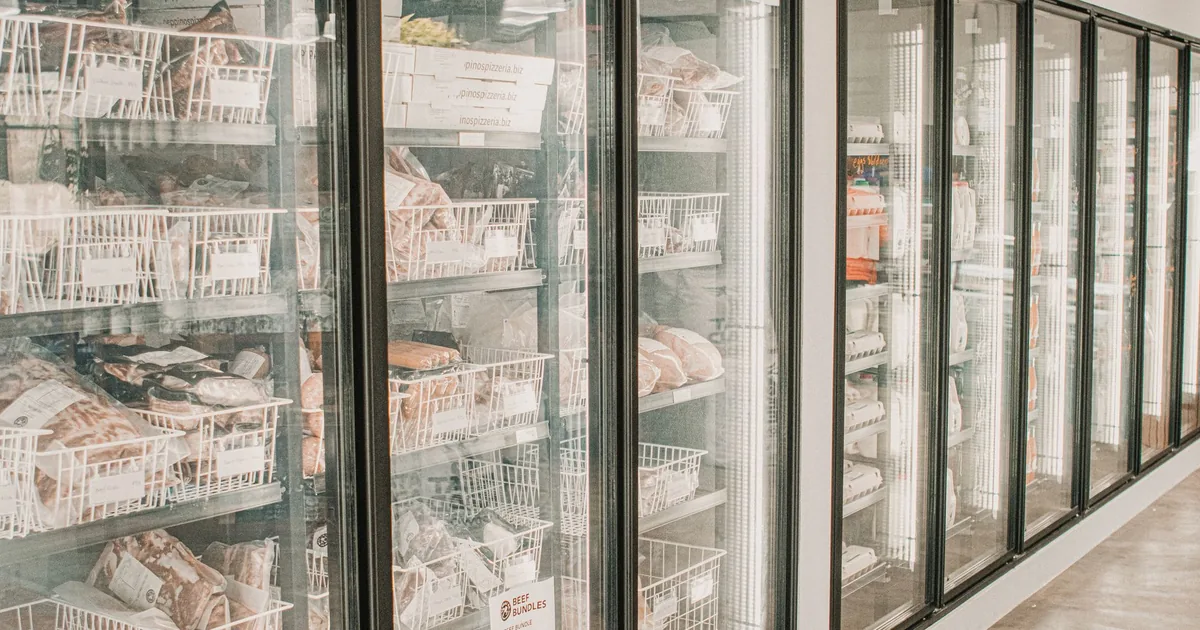
Photo: Daniel & Hannah Snipes · Pexels License (free to use)
This morning, between the protest marches, the sanctions and the football, there was a headline in Le Monde that made me stop: "The cyberattack on supermarket freezers shows how far the Internet and the physical world are now intertwined". It's an opinion piece, and what I really know of it is the thesis, which is already all there in the title. That's enough for me, because it brought a very specific scene to mind.
A supermarket at night, closed. The lights low, the hum of the refrigerated cases, the frozen goods lined up under a skin of frost. Nobody in the aisles. Somewhere, a device connected to the network receives an order it should never receive, and the cold begins, ever so slowly, to slip away. Nobody smashes a window, and nobody notices a thing until, in the morning, someone opens a glass door and feels the air come out lukewarm.
What strikes me is the shift in weight. We're used to thinking of cyberattacks as a matter of data: stolen passwords, encrypted archives, websites that won't answer. Serious things, but they stay on another plane, the plane of screens. A freezer, on the other hand, has no other plane. If it stops doing its job, the damage is measured in kilos of stock, in a broken cold chain, in someone who has to decide what to throw away. Code has laid its hands on the temperature of a room.
By trade, I live right on that border. I spend my days among machines that send me numbers, and a good part of my work is asking myself what lies on the other side of each one. A temperature climbing on a graph is just a line to me, but in the real room it's a disk that's suffering or a fan that's struggling. I learned early on that the distance between "the sensor says" and "the room is" is exactly where things go wrong. And I learned, too, that the most dangerous devices are the most boring ones: put on the network years ago for convenience, left with their factory settings, and then forgotten because, well, they work.
A freezer connected to the Internet makes sense, and it's only fair to say so: it saves energy, it warns you if the door's been left open, it can be checked from afar. The problem isn't the connection, it's that often nobody thinks of it as a piece of infrastructure. Nobody updates it, nobody puts it behind a locked door, nobody wonders who else might be talking to it. It's like leaving the key to the cold room hanging outside, in plain sight, because so far no one has taken it.
I like that it's a general newspaper saying this, and not a trade journal. As long as cybersecurity remains a subject for people who already work on it, the conversation goes round in circles. When it reaches the supermarket shelves, between the peas and the fish fingers, it becomes something anyone can understand without needing it explained: if someone can switch off the cold from far away, the cold is no longer just a matter of electricity.
There's a smaller lesson too, almost a domestic one, that I'm taking away with me. In my work there's a simple rule: before you touch anything, ask yourself whether you can go back. A service that crashes can be restarted; a deleted file can be recovered from a copy. An ice cream that's melted and refrozen is no longer the same ice cream. When the physical world comes into play, the road back gets shorter, and sometimes there isn't one at all. Protecting something that can't be restored has to come before everything else, because afterwards there's nothing left to fix.
Tonight, when I scroll through my machines' graphs, I'll look at the temperatures with a little more respect. Every number is a real room, somewhere.