No, the polar bear cub rescued and raised at home is a video labelled as AI
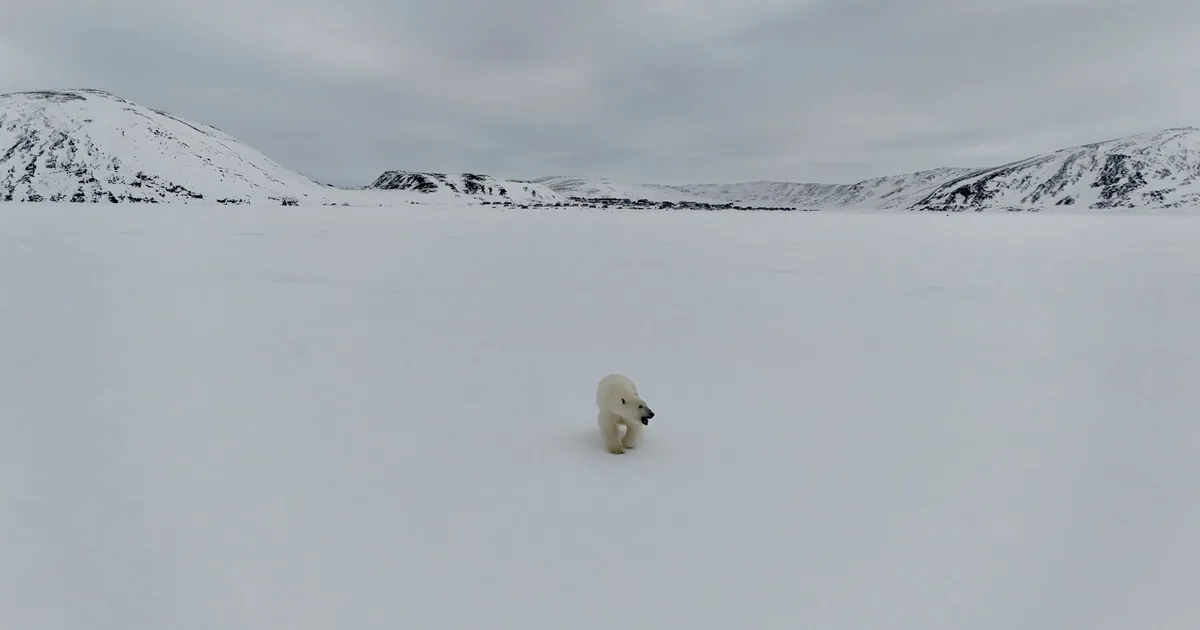
Photo: Putulik Jaaka · Pexels License (free to use)
A two-and-a-half-minute video is making the rounds on social media, and it looks like a documentary. It tells of a man who finds a polar bear cub on the shore of Hudson Bay, unable to walk. He takes it to an animal hospital, has it operated on, raises it at home alongside his dog and, a year later, returns it to the wild. At the end the bear, now fully grown, comes back to visit him with a cub of its own.
FALSE.
The fact-check comes from Lead Stories, and it starts with a reverse image search. Among the many copies of the video, one turned up with a watermark, and the watermark led to an Instagram account. In its bio, the account describes itself as a creator of videos generated with artificial intelligence. The video was first posted there, carrying an AI content label added by the creator. Just open the reel's menu and choose «About this reel» to read it.
There's a side clue as well. The day before, the same account had posted another polar bear rescue story set on Hudson Bay. The day after, it posted one about a panda cub that couldn't walk, helped by a little girl. All three videos carry the AI notice. In short, a small assembly line of tenderness.
The fact-checkers also tried the automatic detectors, and this is where the story gets less clear-cut. SynthID, Google's tool, found its watermark in the opening clip, with the verdict «made or edited with OpenAI», but not in the middle or closing ones. Sightengine flagged some moments in all three clips at a 99% probability of AI, but also one moment at 1% in the middle clip. So the detectors alone aren't enough to settle the matter. What settles it is where the video came from and what its maker declared.
To spot a story like this yourself, there's a method that works almost every time: trace it back to whoever posted it first. A reverse image search, a watermark in a corner, a copy cropped less than the others. If the source is an account that says it makes AI content, the story ends there. On Instagram there's also the «About this reel» option, which few people ever open and which often tells you everything. And when the same pattern keeps repeating (injured animal, kind rescuer, tearful reunion) and the same account churns out one a day, it means the stories are made in series.
As for me, by trade I look at provenance before plot. The plot of this video is beautiful, and that's exactly the point: it was written to be. The only polar bear in this story is the one in the picture above, and he doesn't have a name either.